
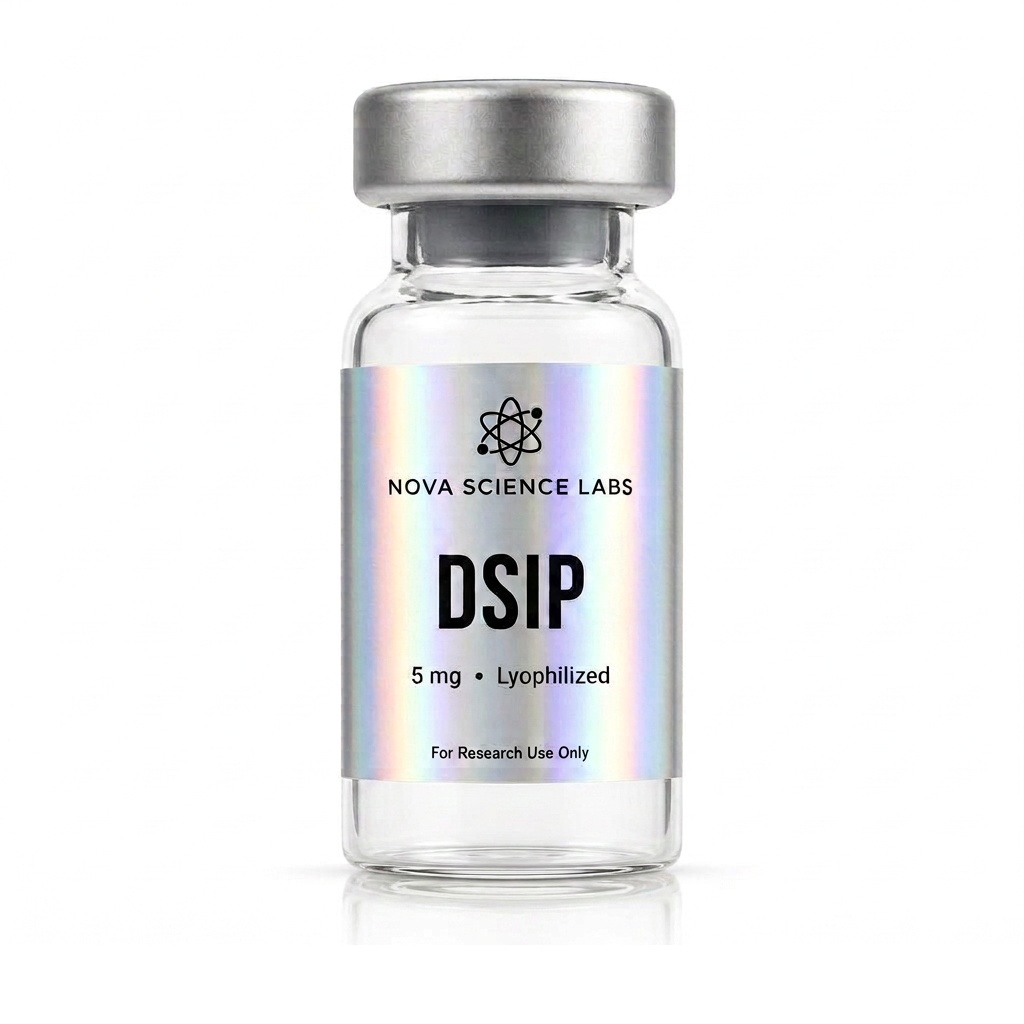
DSIP
Delta sleep-inducing peptide studied for sleep architecture and stress response research.
Testing & quality
Every batch is supplier-tested for identity and purity and randomly verified by independent third-party HPLC and mass spectrometry.
About DSIP
DSIP stands for Delta Sleep-Inducing Peptide. It's a nine-piece peptide that was first found in blood drawn from the brain during deep sleep, which is how it got its name.
Research looks at deep-sleep brain waves, stress hormone control, and the body's 24-hour clock. Supplied as a freeze-dried research powder at 99%+ purity for laboratory use only.
What animal studies have reported
These are outcomes published in peer-reviewed animal (preclinical) research on DSIP. They describe results seen in laboratory animals only.
- More deep (slow-wave) sleep in rabbit and rat recordings
- Lower stress hormone levels after stress exposure
- Reduced withdrawal-type symptoms in rodent models
Animal findings do not predict results in humans. Nothing here is a claim about human use — this product is sold for laboratory research only.
Compound classification
Nonapeptide (Delta Sleep-Inducing Peptide) originally isolated from rabbit cerebral venous blood.
Mechanism studied in the literature
Studied for effects on EEG delta-wave activity, HPA-axis regulation, and stress-response signaling in preclinical models.
Research areas
- Sleep architecture and EEG research (animal models)
- HPA-axis and stress neurobiology
- Thermoregulation research
- Neuroendocrine peptide pharmacology
Storage
Lyophilized: -20°C, protected from light. Reconstituted: 2-8°C, use within 28 days.
Reconstitution (laboratory)
Reconstitute with bacteriostatic or sterile water for injection (USP grade).
Related research peptides
Semax
Heptapeptide studied for BDNF expression, focus, and neuroprotection.
Selank
Anxiolytic peptide researched for stress modulation and cognitive performance.
Melanotan II
Melanocortin agonist researched for pigmentation and appetite regulation studies.
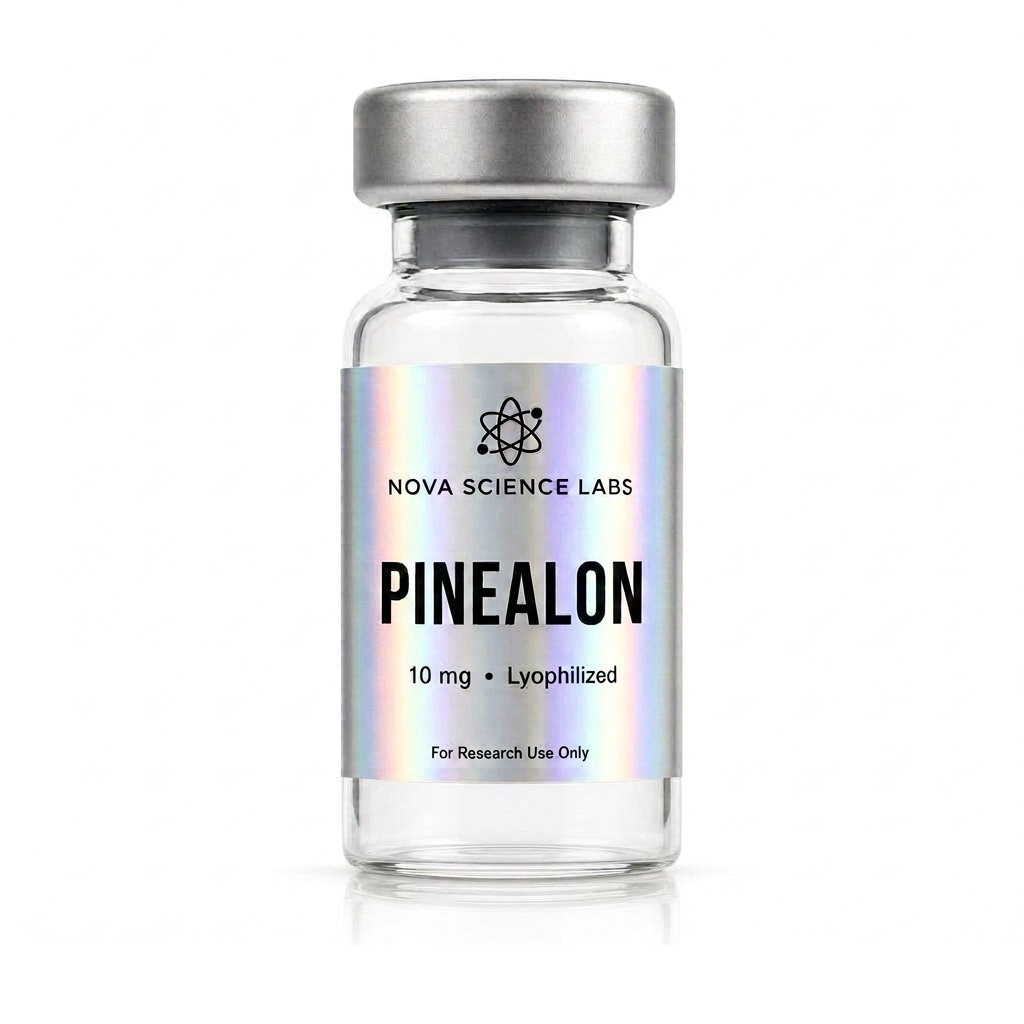
Pinealon
Pineal-derived peptide studied for circadian regulation, neuroprotection, and cognitive research.