
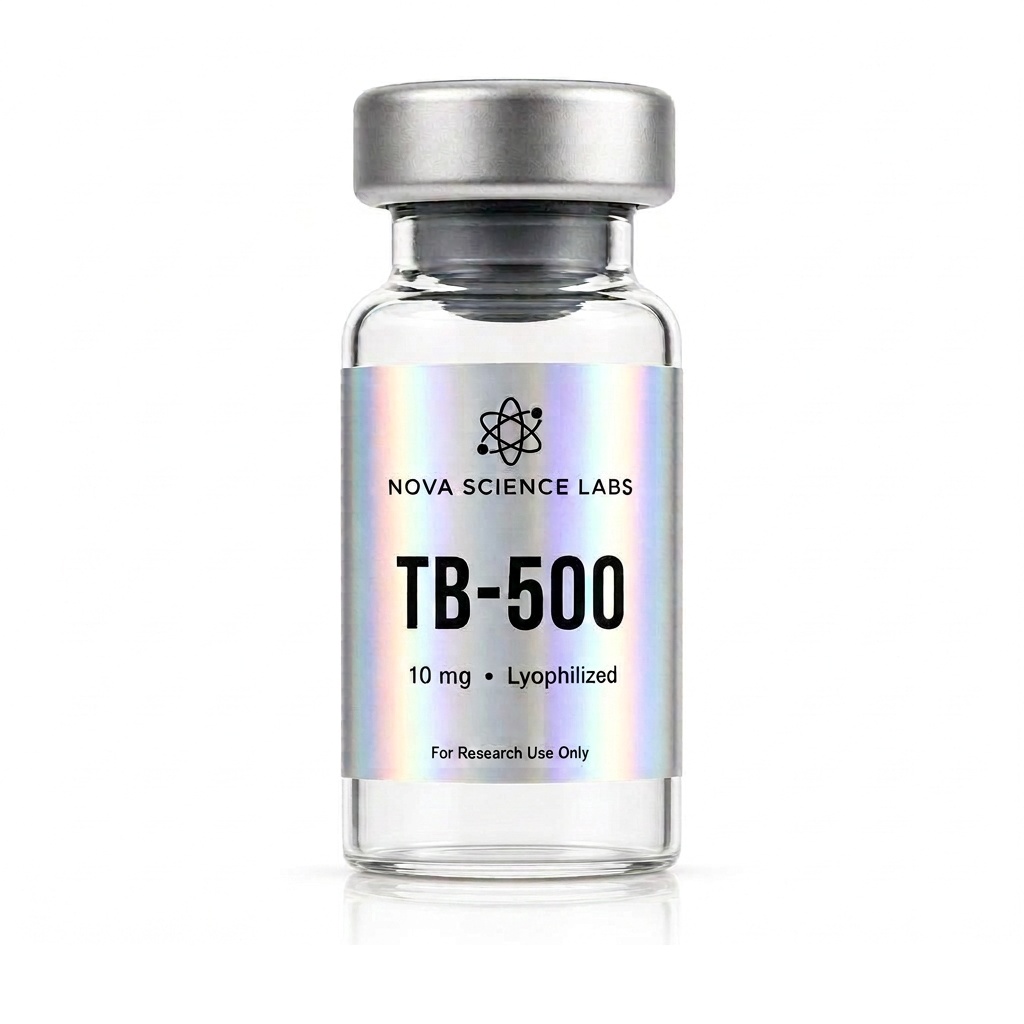
TB-500
Synthetic Thymosin Beta-4 fragment researched for muscle, tendon, and ligament regeneration.
Testing & quality
Every batch is supplier-tested for identity and purity and randomly verified by independent third-party HPLC and mass spectrometry.
About TB-500
TB-500 is a lab-made piece of Thymosin Beta-4, a protein the body already uses when a wound needs to close. Its job is to grab onto actin — the internal scaffolding of a cell — which lets cells change shape and crawl toward an injury.
Research focuses on muscle, tendon, and ligament recovery, blood vessel cell movement, and calming inflammation. It is often paired with BPC-157 in repair studies. Supplied freeze-dried, 99%+ purity, for laboratory use only.
What animal studies have reported
These are outcomes published in peer-reviewed animal (preclinical) research on TB-500. They describe results seen in laboratory animals only.
- Faster wound closure and skin healing in rodent models
- Improved tendon and ligament repair
- Less scar tissue after heart muscle injury in mice
- Reduced inflammation at injury sites
- Improved hair regrowth in rodent studies
Animal findings do not predict results in humans. Nothing here is a claim about human use — this product is sold for laboratory research only.
Compound classification
Synthetic 17-amino-acid fragment of the naturally occurring Thymosin Beta-4 (Tβ4) protein.
Mechanism studied in the literature
Binds G-actin and regulates actin polymerization. Studied for influence on cell migration, angiogenesis, and tissue remodeling in preclinical injury models.
Research areas
- Soft-tissue and muscle regeneration (animal models)
- Wound-healing and angiogenesis research
- Cardiac remodeling studies
- Anti-fibrotic pathway investigation
Storage
Lyophilized: -20°C, protected from light. Reconstituted: 2-8°C, use within 28 days.
Reconstitution (laboratory)
Reconstitute with bacteriostatic or sterile water for injection (USP grade).
Related research peptides
BPC-157
Body protection compound studied for tissue repair, tendon healing, and gastrointestinal protection.
ARA-290
Erythropoietin-derived peptide studied for tissue protection and neuropathic pain research.
GHK-Cu
Copper peptide researched for skin regeneration, wound healing, and anti-aging pathways.
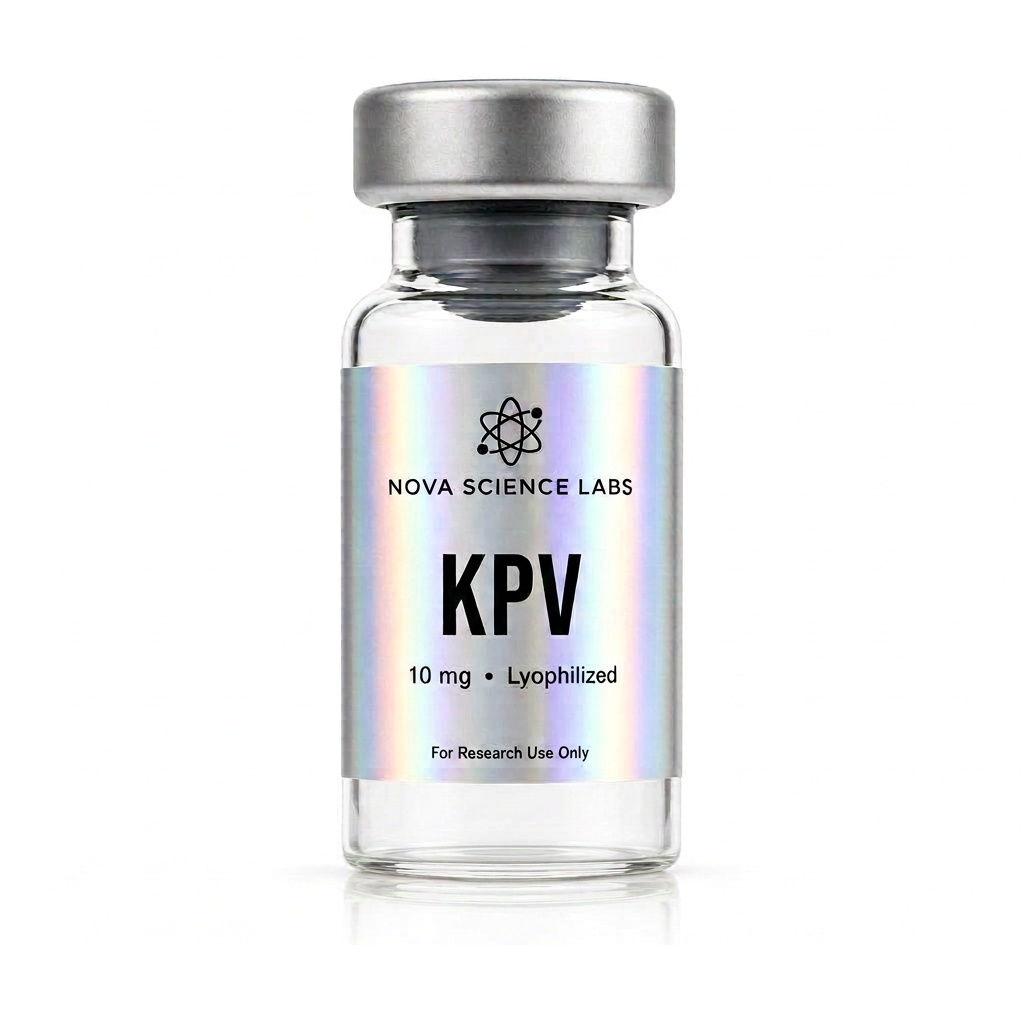
KPV
Alpha-MSH tripeptide studied for anti-inflammatory and gut-barrier research applications.