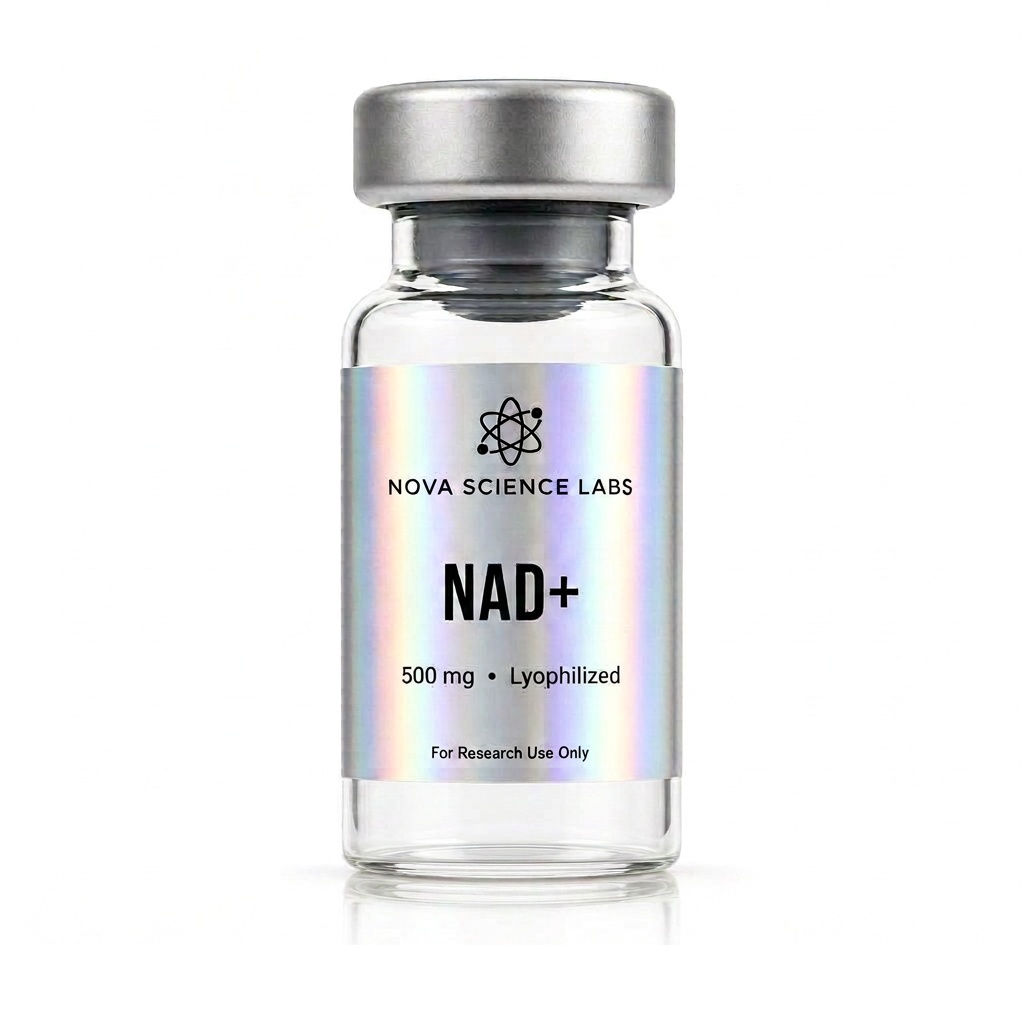
NAD+
Coenzyme studied for mitochondrial function, DNA repair, and cellular energy.
Testing & quality
Every batch is supplier-tested for identity and purity and randomly verified by independent third-party HPLC and mass spectrometry.
About NAD+
NAD+ is a molecule every living cell uses to turn food into usable energy. It is also the fuel that sirtuins and DNA-repair enzymes need to do their jobs, and cells naturally have less of it as they age.
It is a basic lab reagent used to study energy production in mitochondria, DNA repair, and age-related drops in cell energy. Supplied as a freeze-dried research-grade powder at 99%+ purity for laboratory use only.
What animal studies have reported
These are outcomes published in peer-reviewed animal (preclinical) research on NAD+. They describe results seen in laboratory animals only.
- Improved mitochondrial function and endurance in aged mice
- Better DNA repair activity in rodent tissue
- Improved insulin sensitivity in aged animal models
Animal findings do not predict results in humans. Nothing here is a claim about human use — this product is sold for laboratory research only.
Compound classification
Nicotinamide Adenine Dinucleotide — an endogenous redox coenzyme.
Mechanism studied in the literature
Substrate for sirtuins (SIRT1-7), PARPs, and CD38. Central to electron transport, redox balance, and NAD+-dependent signaling studied across geroscience research.
Research areas
- Sirtuin and PARP enzymology
- Mitochondrial bioenergetics
- DNA-damage response research
- Aging and metabolic stress models
Storage
Lyophilized: -20°C, protected from light and moisture. Reconstituted: 2-8°C, use promptly — NAD+ is unstable in solution. Avoid freeze-thaw cycles.
Reconstitution (laboratory)
Reconstitute with bacteriostatic or sterile water for injection (USP grade), just prior to use.
Related research peptides
Epithalon
Tetrapeptide studied for telomerase activation, circadian regulation, and longevity research.
Glutathione
Master antioxidant studied for oxidative stress reduction and detoxification research.
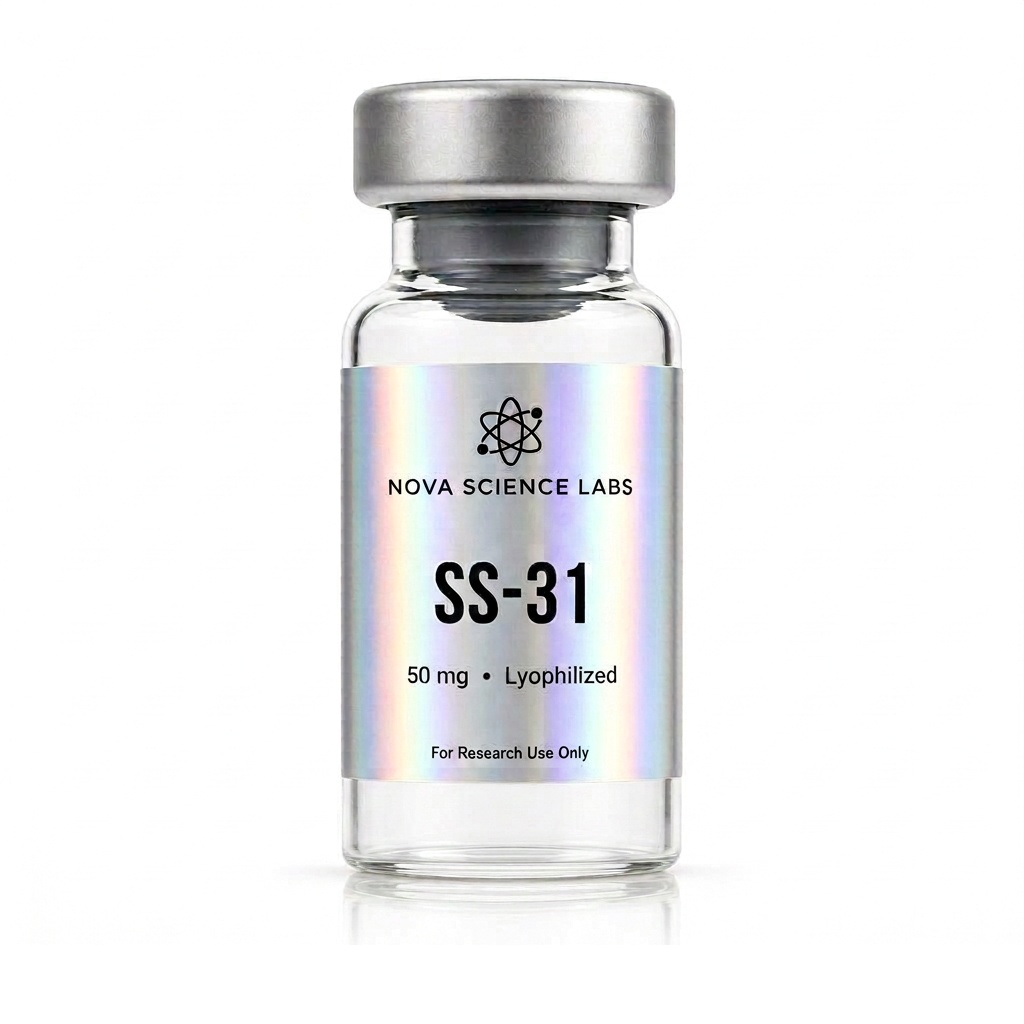
SS-31
Mitochondria-targeted peptide researched for cardiolipin protection and cellular bioenergetics.
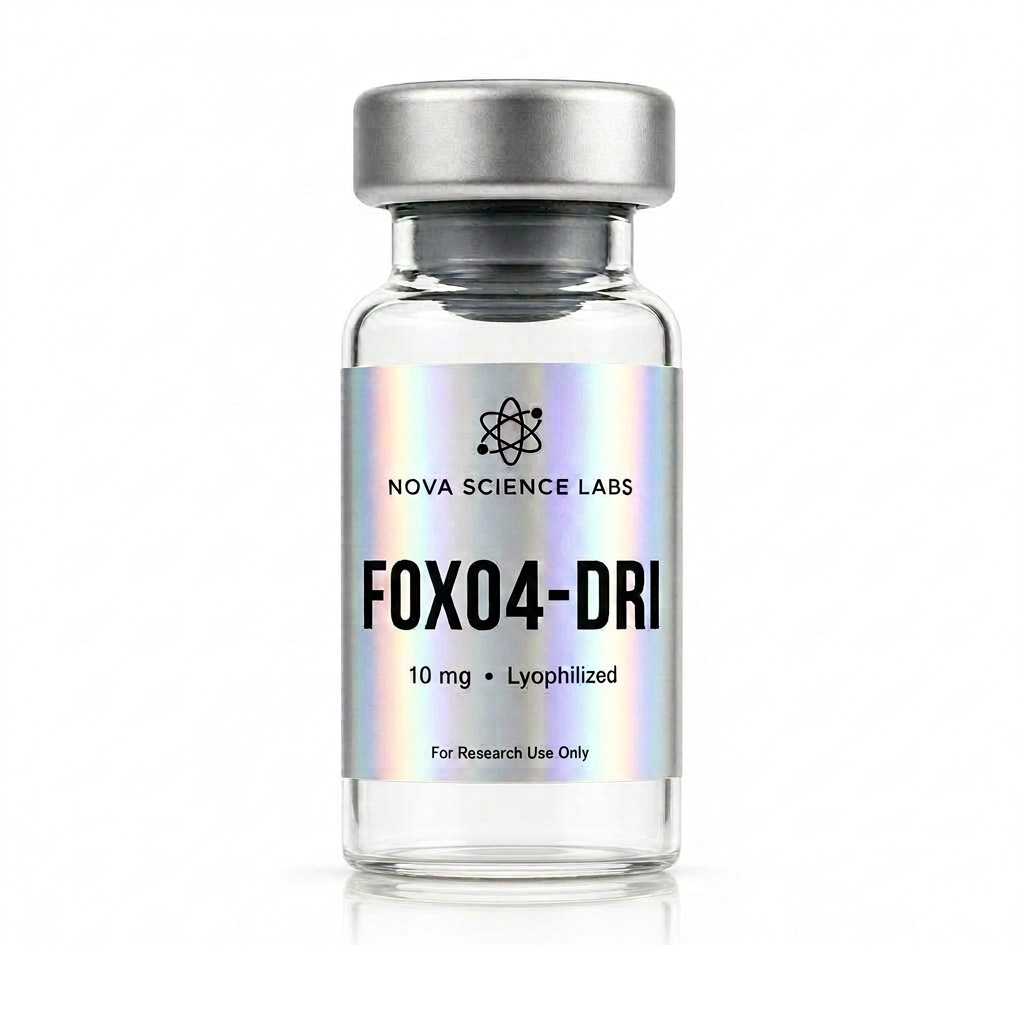
FOXO4-DRI
FOXO4-p53 interfering peptide studied as a targeted senolytic in cellular senescence research.