
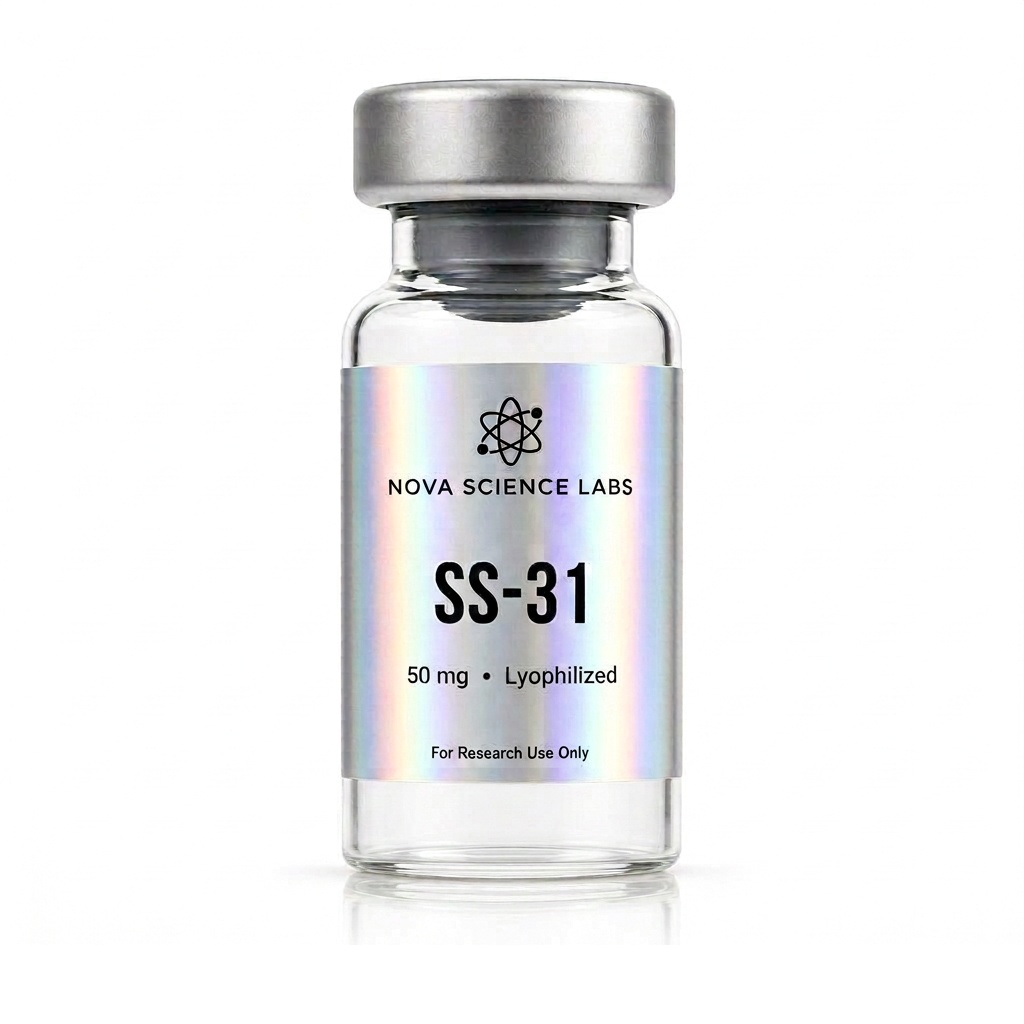
SS-31
Mitochondria-targeted peptide researched for cardiolipin protection and cellular bioenergetics.
Testing & quality
Every batch is supplier-tested for identity and purity and randomly verified by independent third-party HPLC and mass spectrometry.
About SS-31
SS-31 (elamipretide) is a four-piece peptide designed to travel straight to the mitochondria and stick to cardiolipin, a fat that holds the mitochondria's inner folds in shape. When that structure holds together, cells make energy more efficiently and leak fewer damaging free radicals.
Research covers cell energy output, tissue that has lost and regained blood flow, muscle mitochondrial disorders, and age-related drops in ATP. Supplied as a freeze-dried research powder at 99%+ purity for laboratory use only.
What animal studies have reported
These are outcomes published in peer-reviewed animal (preclinical) research on SS-31. They describe results seen in laboratory animals only.
- Better heart function after blood-flow injury in rodent and pig studies
- Improved muscle energy output in aged mice
- Reduced kidney damage in injury models
- Lower levels of damaging free radicals in tissue
Animal findings do not predict results in humans. Nothing here is a claim about human use — this product is sold for laboratory research only.
Compound classification
Synthetic cell-permeable tetrapeptide (Szeto-Schiller class), also known as Elamipretide / MTP-131.
Mechanism studied in the literature
Selectively binds cardiolipin on the inner mitochondrial membrane, stabilizing cristae structure and electron transport chain efficiency in preclinical studies.
Research areas
- Mitochondrial membrane integrity
- Cardiolipin and ETC function
- Ischemia-reperfusion injury models
- Age-related mitochondrial dysfunction research
Storage
Lyophilized: -20°C, protected from light. Reconstituted: 2-8°C, use within 28 days.
Reconstitution (laboratory)
Reconstitute with bacteriostatic or sterile water for injection (USP grade).
Related research peptides
Epithalon
Tetrapeptide studied for telomerase activation, circadian regulation, and longevity research.
NAD+
Coenzyme studied for mitochondrial function, DNA repair, and cellular energy.
Glutathione
Master antioxidant studied for oxidative stress reduction and detoxification research.
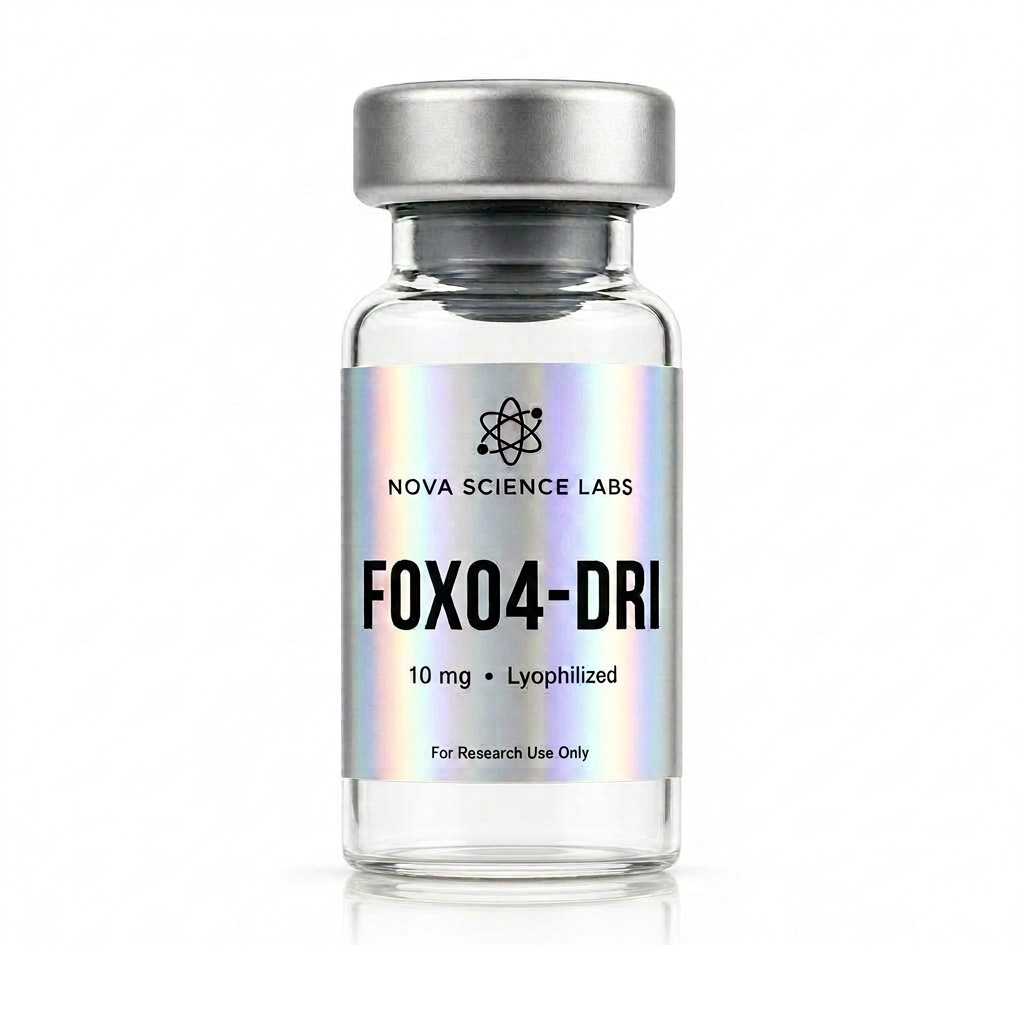
FOXO4-DRI
FOXO4-p53 interfering peptide studied as a targeted senolytic in cellular senescence research.